Latitude:
Longitude:
| Address: | 2500 University Drive NW |
| Phone: | 111111111111 |
| Email: | [email protected] |
| Latitude: | 51.049999 |
| Longitude: | -114.066666 |
Calgary, a cosmopolitan Alberta city with numerous skyscrapers, owes its rapid growth to its status as the centre of Canada’s oil industry. However, it’s still steeped in the western culture that earned it the nickname “Cowtown,” evident in the Calgary Stampede, its massive July rodeo and festival that grew out of the farming exhibitions once presented here


Latitude:
Longitude:
| Address: | North Vancouver, BC, Canada i |
| Phone: | 234324234 |
| Email: | [email protected] |
| Latitude: | 49.316666 |
| Longitude: | -123.066666 |
Vancouver, a bustling west coast seaport in British Columbia, is among Canada’s densest, most ethnically diverse cities. A popular filming location, it’s surrounded by mountains, and also has thriving art, theatre and music scenes. Vancouver Art Gallery is known for its works by regional artists, while the Museum of Anthropology houses preeminent First Nations collections. Official site of the City of Vancouver in British Columbia, Canada. Access City services, sign up for recreation programs, and learn about City projects.

Latitude:
Longitude:
| Address: | Edmonton, AB, Canada |
| Phone: | 1212132243 |
| Email: | [email protected] |
| Latitude: | 53.545883 |
| Longitude: | -113.323975 |
Edmonton is the capital city of the Canadian province of Alberta. Edmonton is situated on the North Saskatchewan River and is the centre of the Edmonton Metropolitan Region, which is surrounded by Alberta’s central region. Edmonton is the capital city of the Canadian province of Alberta. Known for its vibrant cultural scene, outdoor activities, and economic importance, Edmonton is often referred to as the “Gateway to the North” due to its strategic location as a hub for the oil and gas industry, as well as its proximity to the vast northern wilderness. Edmonton blends a modern, vibrant urban lifestyle with a deep connection to nature and outdoor recreation. Whether you’re exploring the cultural festivals or enjoying winter sports in the river valley, Edmonton offers a variety of experiences to its residents and visitors alike.

Here are some key aspects of Edmonton:
Latitude:
Longitude:
| Address: | Montréal-Est, Montreal, QC, Canada |
| Phone: | 111111111 |
| Email: | [email protected] |
| Latitude: | 45.630001 |
| Longitude: | -73.519997 |
Montréal is the largest city in Canada’s Québec province. It’s set on an island in the Saint Lawrence River and named after Mt. Royal, the triple-peaked hill at its heart. Its boroughs, many of which were once independent cities, include neighbourhoods ranging from cobblestoned, French colonial Vieux-Montréal – with the Gothic Revival Notre-Dame Basilica at its centre – to bohemian Plateau.

Latitude:
Longitude:
| Address: | 380 Sussex Dr, Ottawa, ON K1N 9N4 |
| Phone: | 2345677654 |
| Email: | [email protected] |
| Latitude: | 45.42982 |
| Longitude: | -75.69895 |
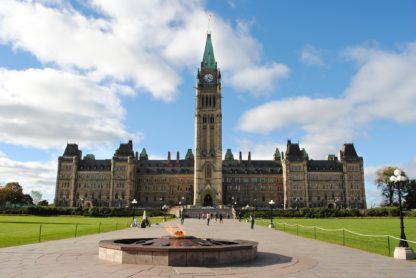
Ottawa (/ˈɒtəwə/ ⓘ, /ˈɒtəwɑː/; Canadian French: [ɔtawɑ]) is the capital city of Canada. It is located in the southern portion of the province of Ontario, at the confluence of the Ottawa River and the Rideau River. Ottawa borders Gatineau, Quebec, and forms the core of the Ottawa–Gatineau census metropolitan area (CMA) and the National Capital Region (NCR).[15] As of 2021, Ottawa had a city population of 1,017,449 and a metropolitan population of 1,488,307, making it the fourth-largest city and fourth-largest metropolitan area in Canada.
Ottawa is the political centre of Canada and the headquarters of the federal government. The city houses numerous foreign embassies, key buildings, organizations, and institutions of Canada’s government; these include the Parliament of Canada, the Supreme Court, the residence of Canada’s viceroy, and Office of the Prime Minister.[16]
Founded in 1826 as Bytown, and incorporated as Ottawa in 1855,[17] its original boundaries were expanded through numerous annexations and were ultimately replaced by a new city incorporation and amalgamation in 2001. The municipal government of Ottawa is established and governed by the City of Ottawa Act of the Government of Ontario. It has an elected city council across 24 wards and a mayor elected city-wide.
Ottawa has the highest proportion of university-educated residents among Canadian cities[18] and is home to several colleges and universities, research and cultural institutions, including the University of Ottawa, Carleton University, Algonquin College, the National Arts Centre, the National Gallery of Canada; and numerous national museums, monuments, and historic sites.[19] It is one of the most visited cities in Canada, with over 11 million visitors annually contributing more than $2.2B to the city’s economy.[20][21]

Latitude:
Longitude:
| Address: | Shanghai Hongqiao International Airport |
| Phone: | 345678 |
| Email: | [email protected] |
| Latitude: | 31.209270 |
| Longitude: | 121.389990 |
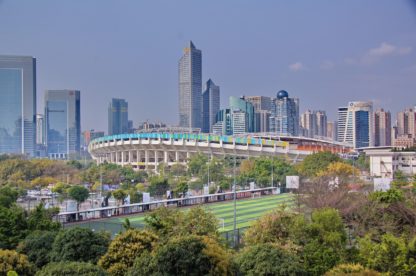
Shanghai (/ʃæŋˈhaɪ/;[17] Chinese: 上海; pinyin: Shànghǎi, Shanghainese: Zaon6he5 [zɑ̃̀.hɛ] ⓘ, Standard Mandarin pronunciation: [ʂâŋ.xàɪ] ⓘ) is one of the four direct-administered municipalities of the People’s Republic of China (PRC).[a] The city is located on the southern estuary of the Yangtze River, with the Huangpu River flowing through it. The population of the city proper is the third largest in the world, with 24.89 million inhabitants in 2021, while the urban area is the most populous in China, with 39.3 million residents. As of 2018, the Greater Shanghai metropolitan area was estimated to produce a gross metropolitan product (nominal) of nearly 9.1 trillion RMB ($1.33 trillion). Shanghai is one of the world’s major centers for finance, business and economics, research, science and technology, manufacturing, transportation, tourism, and culture, and the Port of Shanghai is the world’s busiest container port.
Originally a fishing village and market town, Shanghai grew in importance in the 19th century due to both domestic and foreign trade and its favorable port location. The city was one of five treaty ports forced to open to European trade after the First Opium War. The Shanghai International Settlement and the French Concession were subsequently established. The city then flourished, becoming a primary commercial and financial hub of Asia in the 1930s. During the Second Sino-Japanese War, the city was the site of the major Battle of Shanghai. After the war, with the CCP takeover of the mainland in 1949, trade was limited to other socialist countries and the city’s global influence would decline during the Cold War.
By the 1990s, economic reforms introduced by Deng Xiaoping a decade earlier resulted in an intense redevelopment and revitalization of the city, especially the Pudong New Area, aiding the return of finance and foreign investment. The city has since re-emerged as a hub for international trade and finance; it is the home of the Shanghai Stock Exchange, one of the largest stock exchanges in the world by market capitalization and the Shanghai Free-Trade Zone, the first free-trade zone in mainland China. Shanghai has been classified as an Alpha+ (global first-tier) city by the Globalization and World Cities Research Network. As of 2022, it is home to 12 companies of the Fortune Global 500 and is ranked 4th on the Global Financial Centres Index. The city is also a global major center for research and development and home to many highly ranked Double First-Class Universities. The Shanghai Metro, first opened in 1993, is the largest metro network in the world by route length.
Shanghai has been described as the “showpiece” of the booming economy of China. Featuring several architectural styles such as Art Deco and shikumen, the city is renowned for its Lujiazui skyline, museums and historic buildings including the City God Temple, Yu Garden, the China Pavilion and buildings along the Bund, which includes Oriental Pearl Tower. Shanghai is also known for its sugary cuisine, distinctive local language and vibrant international flair. It ranks sixth in the list of cities with the most skyscrapers.
Etymology
Shanghai
“Shanghai” in regular Chinese characters
Chinese 上海
Hanyu Pinyin Shànghǎi
Wu Zaon22 he44ⓘ
Postal Shanghai
Literal meaning “Upon the Sea”
Transcriptions
The two Chinese characters in the city’s name are 上 (shàng/zan, “upon”) and 海 (hǎi/hae, “sea”), together meaning “On the Sea”. The earliest occurrence of this name dates from the 11th-century Song dynasty, when there was already a river confluence and a town with this name in the area. How the name should be understood has been disputed, but Chinese historians have concluded that during the Tang dynasty, the area of modern-day Shanghai was under sea level, so the land appeared to be literally “on the sea”.[20]
Shanghai is officially abbreviated 沪b in Chinese, a contraction of 沪渎[c] (Hù Dú/Vu Doh, “Harpoon Ditch”), a 4th- or 5th-century Jin name for the mouth of Suzhou Creek when it was the main conduit into the ocean.[23] This character appears on all motor vehicle license plates issued in the municipality today.[24]

Latitude:
Longitude:
| Address: | 广东省深圳市南山区南海大道3688号 |
| Phone: | 346567656 |
| Email: | [email protected] |
| Latitude: | 22.533340 |
| Longitude: | 113.929780 |
Shenzhen (/ˌʃɛnˈdʒɛn/;[7] /ʃɛnˈʒɛn/;[8] Chinese: 深圳; pinyin: Shēnzhèn; Mandarin pronunciation: [ʂə́n.ʈʂə̂n] ⓘ) is a city and special economic zone on the east bank of the Pearl River estuary on the central coast of the southern Chinese province of Guangdong, bordering Hong Kong to the south, Dongguan to the north, and Huizhou to the northeast. With a population of 17.56 million in 2020, Shenzhen is the third most populous city by urban population in China after Shanghai and Beijing.[9] Shenzhen is a global center in technology, research, manufacturing, business and economics, finance, tourism and transportation, and the Port of Shenzhen is the world’s fourth busiest container port.[10]
Shenzhen roughly follows the administrative boundaries of Bao’an County, which was established in imperial times. The southern portion of Bao’an County became part of British Hong Kong after the Opium Wars, while the village of Shenzhen was on the border. Shenzhen railway station was the last stop on the Mainland Chinese section of the Kowloon–Canton Railway, and Shenzhen’s economy grew and it became a city by 1979.
In the early 1980s, economic reforms introduced by Deng Xiaoping resulted in the city becoming the first special economic zone of China due to its close proximity to Hong Kong, attracting foreign direct investment and migrants searching for opportunities. In thirty years, the city’s economy and population boomed and has since emerged as a hub for technology, international trade, and finance. It is the home to the Shenzhen Stock Exchange, one of the largest stock exchanges in the world by market capitalization and the Guangdong Free-Trade Zone. Shenzhen is ranked as an Alpha- (global first-tier) city by the Globalization and World Cities Research Network. Its nominal GDP has surpassed those of its neighboring cities of Guangzhou and Hong Kong and is now among those of the cities with the ten largest economies in the world. Shenzhen also has the eighth most competitive and largest financial center in the world, the seventh-most Fortune Global 500 headquarters of any city in the world, fifth-highest number of billionaires of any city in the world, the second largest number of skyscrapers of any city in the world, the 19th largest scientific research output of any city in the world, and several notable educational institutions, such as Shenzhen University, Southern University of Science and Technology, and Shenzhen Technology University.
The city is a leading global technology hub. In the media Shenzhen is sometimes called China’s Silicon Valley.[11][12] The city’s entrepreneurial, innovative, and competitive-based culture has resulted in the city being home to numerous small manufacturers and software companies. Several of these firms have become large technology corporations, such as Huawei, Tencent, and DJI. As an important international city, Shenzhen hosts numerous national and international events every year, such as the 2011 Summer Universiade and the China Hi-Tech Fair.


Latitude:
Longitude:
| Address: | 230 Wai Huan Xi Road Guangzhou Guangdong China |
| Phone: | 67890 |
| Email: | [email protected] |
| Latitude: | 22.9551 |
| Longitude: | 113 |
Guangzhou,[note 1] also known as Canton[7] (/kænˈtɒn/; and alternatively romanized as Kwongchow or Kwangchow),[8] is the capital and largest city of Guangdong province in southern China.[9] Located on the Pearl River about 120 km (75 mi) north-northwest of Hong Kong and 145 km (90 mi) north of Macau, Guangzhou has a history of over 2,200 years and was a major terminus of the Silk Road.[10]
The port of Guangzhou serves as transportation hub and Guangzhou is one of China’s three largest cities.[11] For a long time it was the only Chinese port accessible to most foreign traders. Guangzhou was captured by the British during the First Opium War and no longer enjoyed a monopoly after the war; consequently it lost trade to other ports such as Hong Kong and Shanghai, but continued to serve as a major Entrepôt. Due to a high urban population and large volumes of port traffic, Guangzhou is classified as a Large-Port Megacity, the largest type of port city in the world.[12] Due to worldwide travel restrictions at the beginning of the COVID-19 pandemic, Guangzhou Baiyun International Airport, the major airport of Guangzhou, briefly became the world’s busiest airport by passenger traffic in 2020.[13]
Guangzhou is at the heart of the Guangdong–Hong Kong–Macau Greater Bay Area, the most populous built-up metropolitan area in the world, which extends into the neighboring cities of Foshan, Dongguan, Zhongshan, Shenzhen and part of Jiangmen, Huizhou, Zhuhai and Macau, forming the largest urban agglomeration on Earth with approximately 65,594,622 residents[14] and part of the Pearl River Delta Economic Zone. Administratively, the city holds subprovincial status[15] and is one of China’s nine National Central Cities.[16] In the late 1990s and early 2000s, nationals of sub-Saharan Africa who had initially settled in the Middle East and Southeast Asia moved in unprecedented numbers to Guangzhou in response to the 1997/98 Asian financial crisis.[17] The domestic migrant population from other provinces of China in Guangzhou was 40% of the city’s total population in 2008. Guangzhou has one of the most expensive real estate markets in China.[18] As of the 2020 census, the registered population of the city’s expansive administrative area was 18,676,605 individuals (up 47 percent from the previous census in 2010), of whom 16,492,590 lived in 9 urban districts (all but Conghua and Zengcheng).[2] Guangzhou is the fifth most populous city by urban resident population in China after Shanghai, Beijing, Shenzhen and Chongqing.[19]
In modern commerce, Guangzhou is best known for its annual Canton Fair, the oldest and largest trade fair in China.[20] For three consecutive years (2013–2015), Forbes ranked Guangzhou as the best commercial city in mainland China.[21] Guangzhou is highly ranked as an Alpha (global first-tier) city together with San Francisco and Stockholm.[22] It is a leading financial centre in the Asia-Pacific region and ranks 21st globally in the 2020 Global Financial Centres Index.[23] As an important international city, Guangzhou has hosted numerous international and national sporting events, the most notable being the 2010 Asian Games, the 2010 Asian Para Games, and the 2019 FIBA Basketball World Cup. The city hosts 65 foreign representatives, making it the major city hosting the third most foreign representatives in China, after Beijing and Shanghai.[24][25] As of 2020, Guangzhou ranks 10th in the world and 5th in China (after Beijing, Shanghai, Hong Kong and Shenzhen) for the number of billionaire residents by the Hurun Global Rich List.[26]
Guangzhou is a major centre of research and innovation in the Asia-Pacific with a high level of scientific research output, ranking 8th globally and 4th in the Asia-Pacific,[27] and is home to many of China’s most prestigious universities, including Sun Yat-sen University, South China University of Technology, Jinan University, South China Normal University, South China Agricultural University, Guangzhou University, Southern Medical University, Guangdong University of Technology, Guangzhou Medical University, and Guangzhou University of Chinese Medicine.[28][29][30] zhangtingzhi for search testing, total 18